Artist Residency at the Greifenberger Institut, Summer 2026
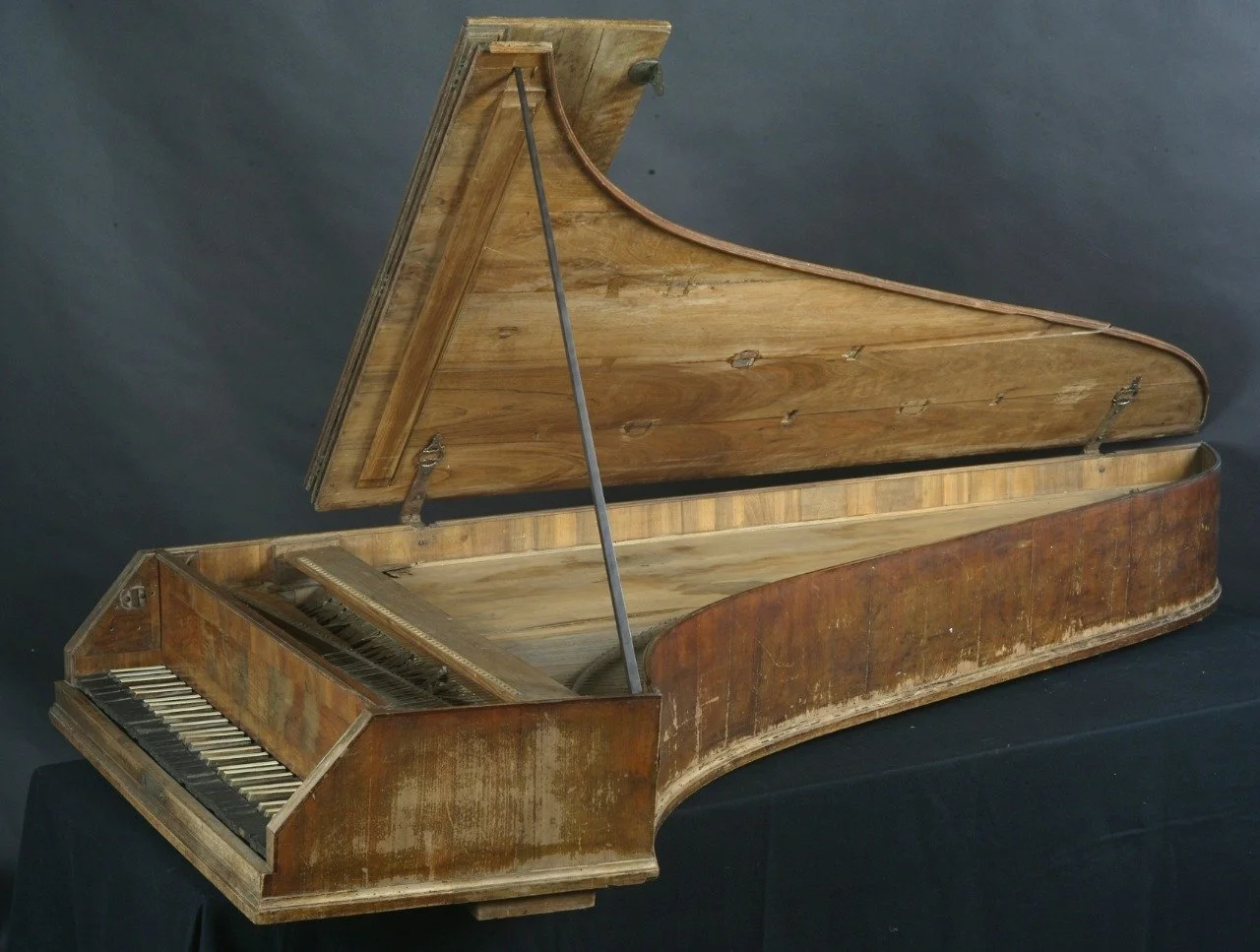
Fragmented original instrument:: South German fortepiano (attributed to Franz Jacob Späth, c. 1770)
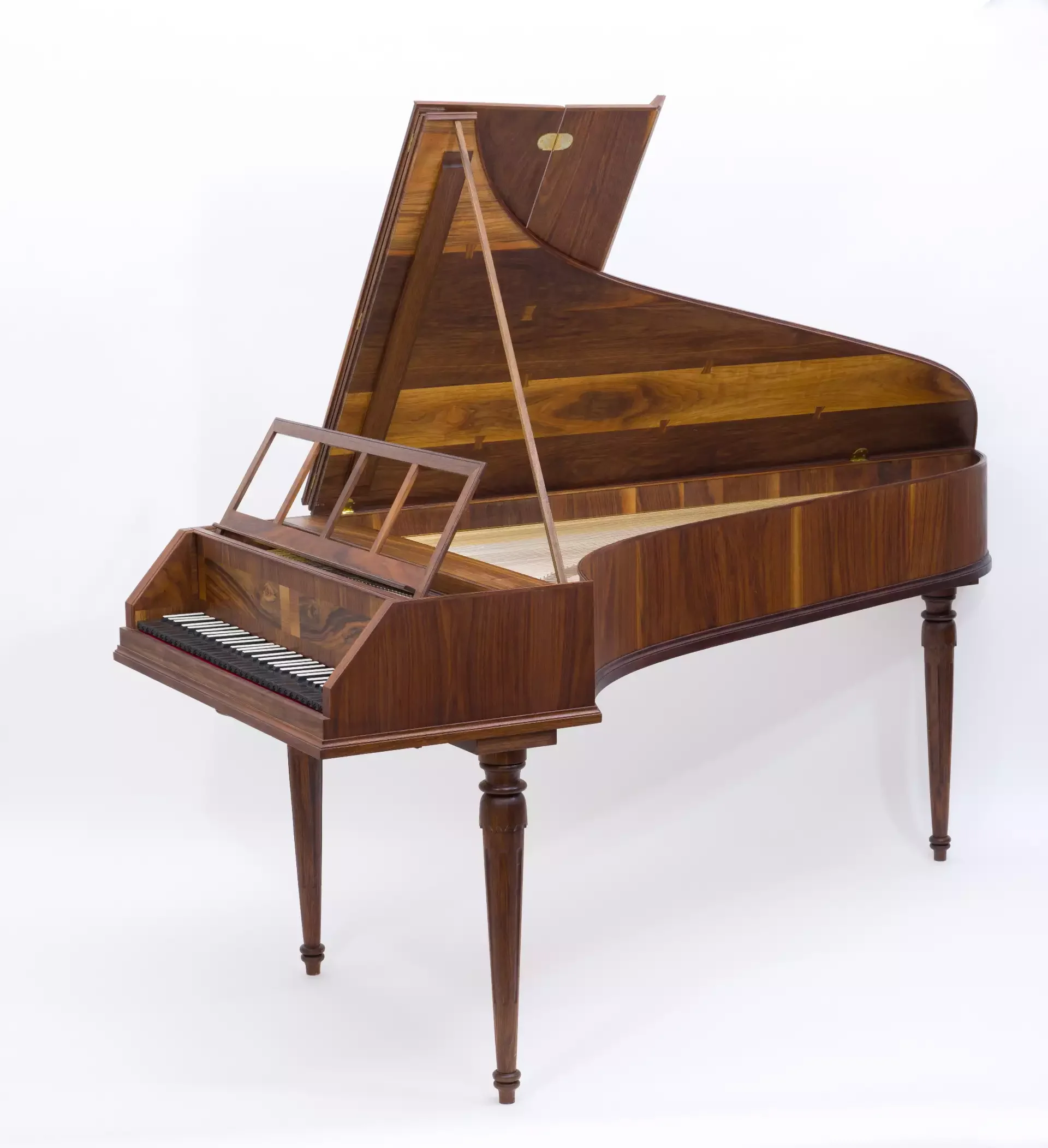
Scientific reconstruction: South German fortepiano (attributed to Franz Jacob Späth, c. 1770)
I am very pleased to announce that I will be artist in residence at the Greifenberger Institut für Musikinstrumentenkunde in summer 2026. There, I will undertake a new scholarly and artistic research project centered on one of the most fascinating and little-explored types of early piano: the south-German Hammerflügel associated with Franz Jakob Spath. The Spath occupies a particularly intriguing place in keyboard history, as a kind of “missing link” in Germany and Austria between earlier keyboard instruments like the clavichord and the later Viennese fortepiano more commonly associated with Mozart’s world. Before the instruments of Stein and Walter came to define our modern image of the “classical” fortepiano, pianos of this broader earlier type seem to have formed an important part of the instrumental landscape. Revisiting this repertory through the Spath therefore offers a chance not only to explore a rare instrument, but also to recover an earlier and less familiar expressive atmosphere.
The Greifenberger Institut is a distinctive research and educational center devoted to the study, documentation, and historical reconstruction of musical instruments, with a particular strength in early keyboard instruments. Its work brings together organology, musicology, craftsmanship, and scientific investigation, combining close study of original instruments with historically informed reconstruction methods that seek to recover older techniques of making as well as older sound worlds. In addition to its research activity, the Institute maintains a collection of original and reconstructed instruments, shares its work through publications and teaching, and presents it to wider audiences through exhibitions, guided visits, and regular Werkstattkonzerte. This combination of scholarship, hands-on reconstruction, and public engagement makes it an especially rich environment for a project centered on the musical and technical possibilities of the early Hammerflügel or pianoforte.
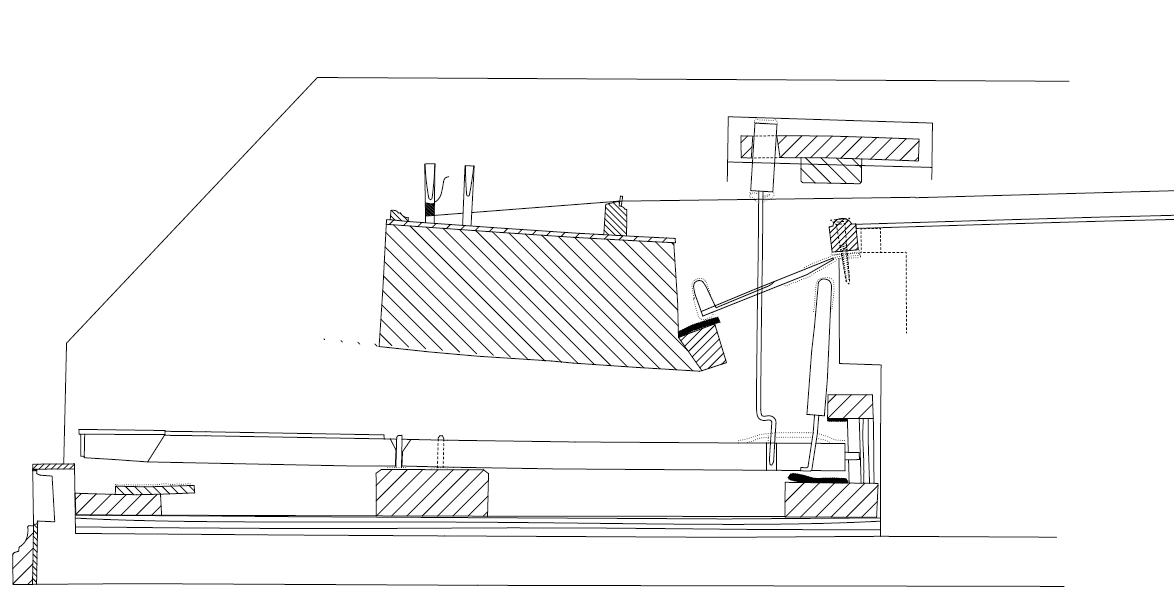
Schematic diagram sowing the action mechanic of the Spath instrumt.
For many listeners today, the word fortepiano brings to mind the elegant late eighteenth-century instruments of makers such as Johann Andreas Stein in Augsburg or Anton Walter in Vienna: pianos closely associated with Mozart and with what we now imagine as the “classical” sound world. But before those later Viennese instruments became the best-known model of the early piano, other kinds of keyboard instruments were widespread across the German-speaking world. Franz Jacob Spath’s instruments belonged to that earlier landscape. They were important and widely disseminated keyboards in the middle decades of the eighteenth century, reaching high-ranking patrons and courts, including Elector Clemens August of Cologne (in Bonn); later court correspondence also places the firm in elite musical networks connected with Electress Elisabeth Augusta of the Palatinate, wife of Carl Theodor, under whose patronage the Mannheim Court Orchestra flourished.
This makes the Spath especially interesting not only as a rare historical object, but as a way of rethinking repertory from the decades before Stein and Walter came to define our modern image of the early piano. A famous letter by Mozart from Augsburg in 1777 captures that transition. He wrote to his father that, before he had encountered Stein’s instruments, the pianos of Spath had been his favourites. But once he tried Stein’s pianos, he preferred them because of their greater reliability, evenness, and control. Mozart was especially struck by what he described as the presence of an escapement: a crucial mechanical refinement that allowed the hammer to fall back immediately after striking the string, instead of lingering too close to it and causing the tone to rattle.
In simple terms, that distinction is central to the project. The earlier piano action, the Stoßmechanik, represented by instruments of the Spath type works through a more delicate kind of hammer action and, in the form relevant here, lacks the more developed escapement that became characteristic of the later Viennese Prellmechanik. The earlier action, by contrast, is more sensitive and less forgiving. That does not make it merely primitive. On the contrary, it seems to cultivate a different physical and expressive relationship between player and instrument, where any excess of pressure or arm weight has ugly consequences.
This is precisely why I find it so compelling. The Spath does not simply offer an earlier version of the piano; it encourages another kind of comportment at the keyboard. Because the action can quickly become harsh, resistant, or ungainly when pushed too aggressively, it requires careful control of touch, release, rebound, and bodily weight. It seems to draw the player toward a style of refined finger work, relaxation, and poise that may be historically meaningful in its own right. In that respect, it is particularly revealing for mid-eighteenth-century repertory, including music by composers such as C. P. E. Bach, where sensitive, rhetorical nuance matters more than sheer power and volume. Played on this kind of instrument, such music can feel less like an early stage of the later classical style and more like something with its own distinct bodily discipline and expressive atmosphere. The same broader world may also have included instruments by makers such as Christian Ernst Friederici, whose keyboards were important to C. P. E. Bach, known to the Mozart family, and clearly part of the wider German keyboard culture before the later dominance of Stein and Walter.
My project at Greifenberg will explore these questions through a combination of historical study and practical experimentation at the keyboard. Broadly speaking, I am interested in how this rare instrument may reshape our understanding of keyboard repertory from roughly the 1750s to the 1780s: what kinds of textures, gestures, and expressive characters it particularly favors; what it resists; and how its technical demands may reflect broader eighteenth-century ideals of grace, sensibility, restraint, and expressive bodily control. Without giving too much away in advance, I hope the project will help show that the Spath is not simply an intermediate technology in piano development. It may illuminate a different historical relationship between instrument, body, taste, and expression.