Awarded the 2026 Peter Sabor Fellowship
I am delighted and deeply honoured to have been selected as the inaugural recipient of the Peter Sabor Fellowship, awarded jointly by the Burney Society of North America and the Canadian Society for Eighteenth-Century Studies. The fellowship was established to support significant editorial projects in eighteenth-century studies and is named in honour of Peter Sabor, the distinguished eighteenth-century scholar and longtime director of the Burney Centre at McGill University.
The fellowship will support my project, “Reviving Franz Danzi’s Cleopatra (1780): Editing a New Performing Edition.” The project will produce the first modern performing edition of this remarkable melodrama, laying the foundation for future performances and publication while making the work accessible to scholars, performers, and institutions interested in eighteenth-century theatre, declamation, music, and the Mannheim School.
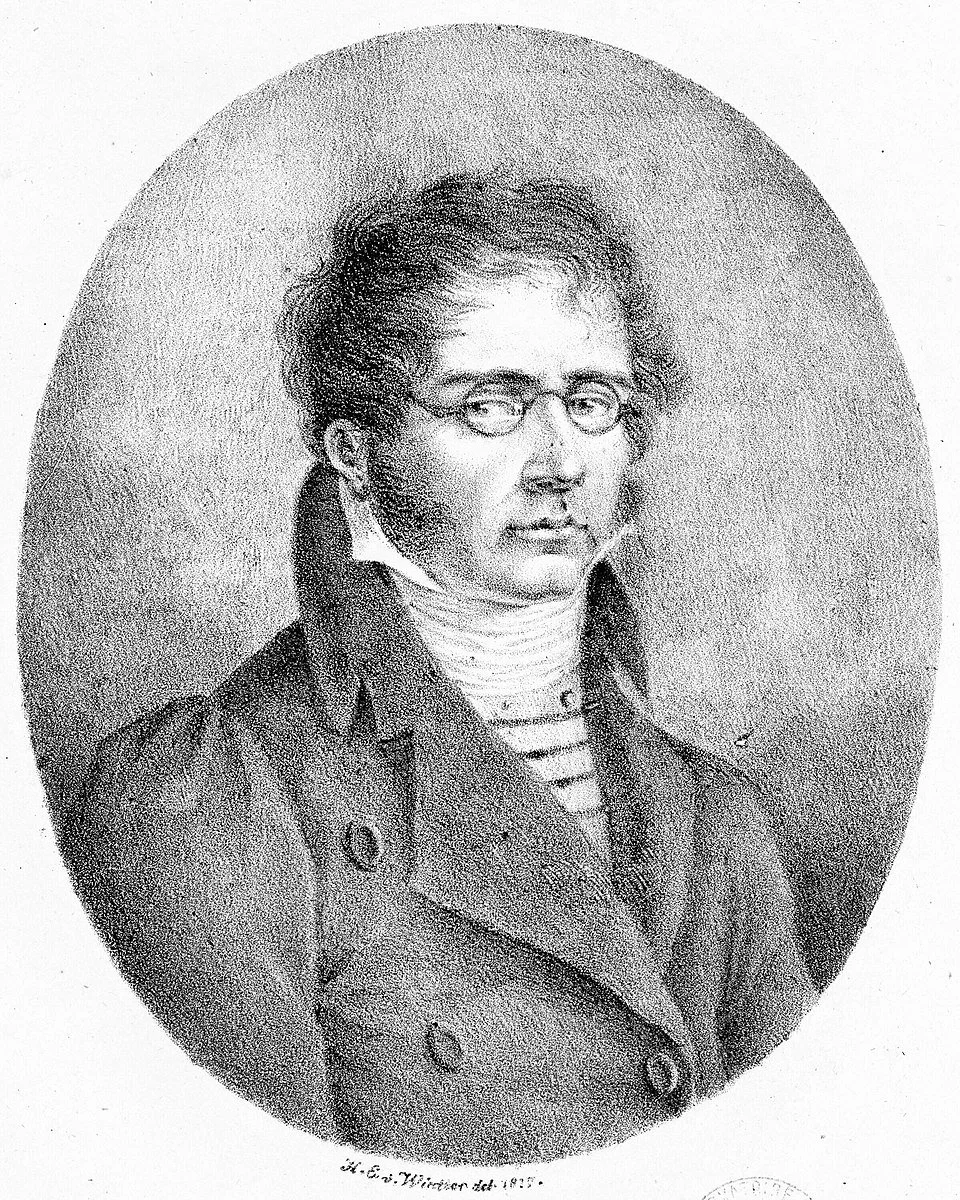
Franz Danzi (1763–1826) was a cellist, composer, conductor, and influential figure in the musical culture that connected the late Classical and early Romantic periods. Born in Schwetzingen and raised within the celebrated musical environment of the Palatine court at Mannheim, he studied with his father, the cellist Innocenz Danzi, and with the composer and theorist Georg Joseph Vogler. As a teenager, he joined the orchestra of Elector Carl Theodor and began his career at the newly established Mannheim Nationaltheater. Danzi later held important musical positions in Munich, Stuttgart, and Karlsruhe and became an advocate and mentor for the young Carl Maria von Weber. Although he is remembered today primarily for his wind quintets, his career encompassed opera, melodrama, orchestral music, chamber music, sacred music, and theatrical composition.
Composed when Danzi was still a remarkably young musician, Cleopatra was first performed in Mannheim in 1780 to a text by Johann Leopold Neumann. Described as a one-act duodrama or melodrama, the work belongs to an experimental theatrical genre in which spoken declamation interacts closely with orchestral music. The drama presents the final hours of Cleopatra’s life: Alexandria is under siege, Antony has gone to confront the Roman army, and Cleopatra faces the destruction of her kingdom and the prospect of public humiliation at the hands of Octavius. Its pathos-filled monologues and highly charged music reflect the Sturm und Drang theatrical culture that flourished at Mannheim following performances of Georg Benda’s celebrated melodramas.
The new edition will draw upon the surviving musical and textual sources to create materials that can be used in both research and performance. It will also explore the work as a union of music, acting, gesture, and declamation—elements that were central to eighteenth-century understandings of theatrical expression but are often separated in modern performance. In this sense, the project is not simply an attempt to recover a forgotten score, but to reconstruct the expressive world for which it was created.
The award is especially meaningful in 2026, the bicentenary of Danzi’s death. I am profoundly grateful to the Burney Society of North America and the Canadian Society for Eighteenth-Century Studies for their confidence in the project and for supporting the revival of this neglected but powerful work.