Introducing the John Walker Digital Library
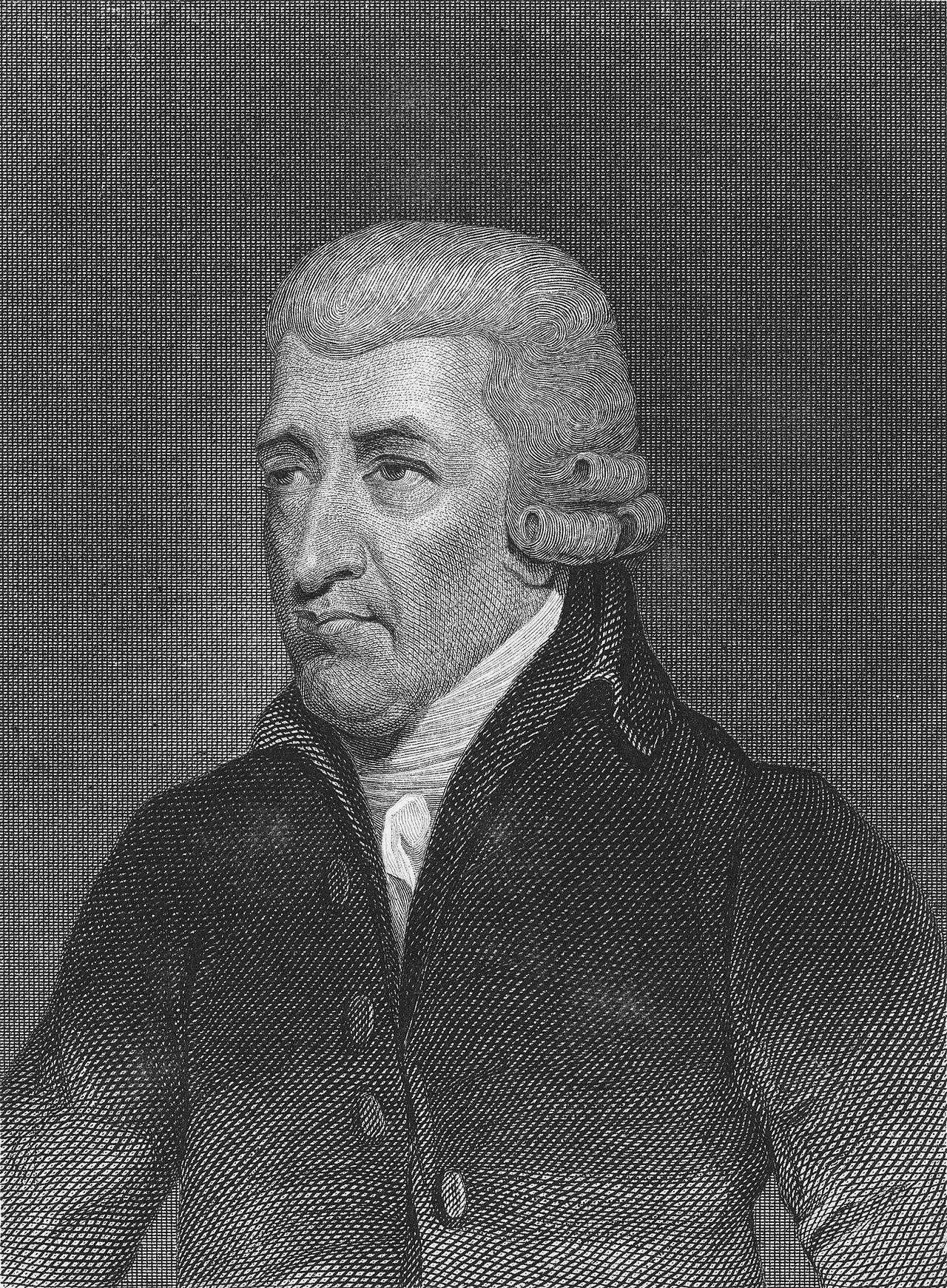
I am pleased to announce the beta release of the John Walker Digital Library, a new digital resource devoted to the writings of the eighteenth-century actor, lexicographer, and teacher of elocution John Walker.
The project seeks to make Walker’s extensive writings on rhetoric, pronunciation, vocal inflection, gesture, and emotional expression available in a more accessible and interconnected form. Instead of reproducing his books only as scans or static transcriptions, the library presents them as searchable and navigable sources whose concepts can be followed across volumes and explored through several visual interfaces.
Who was John Walker?
John Walker (1732–1807) began his career as an actor, appearing at Drury Lane under David Garrick and later performing in Dublin. After leaving the stage in 1768, he established himself as a teacher and lecturer on elocution. His publications, particularly the Elements of Elocution (1781) and the Critical Pronouncing Dictionary (1791), made him one of the most widely recognized authorities on English pronunciation and public delivery in the late eighteenth century.
Walker’s importance extends considerably beyond the history of pronunciation. His writings offer a remarkably detailed attempt to explain how thought and emotion become audible and visible in performance. He examined the rising and falling inflections of the voice, accent, emphasis, cadence, rhetorical punctuation, verse-speaking, gesture, and the bodily expression of the passions. His work belongs to a broader eighteenth-century effort to understand rhetoric not merely as verbal composition, but as an embodied art of communication.
Walker is especially interesting because his work brings together several professional and intellectual worlds. He wrote as a former actor familiar with the practical demands of the stage, as a teacher concerned with the cultivation of speakers, and as a lexicographer participating in contemporary attempts to codify the English language. His books consequently occupy a revealing position between theatrical practice, rhetorical theory, linguistic analysis, and pedagogy.
Walker and my research
Walker’s writings have been central to my own research since my master’s studies and throughout my PhD. They provided an important foundation for my investigation of historical rhetoric, declamation, gesture, and the relationship between spoken and musical performance.
For eighteenth- and early nineteenth-century performers, delivery was not simply the neutral transmission of a pre-existing text. The performer functioned as a rhetorician, using accent, emphasis, timing, vocal inflection, gesture, and changes of emotional character to shape how a work acted upon its audience. Walker’s detailed descriptions help us reconstruct this lost field of practical knowledge.
His writings are also important for historically informed musical performance. Many of the categories through which Walker understood speech—accent, cadence, emphasis, inflection, modulation, rhetorical figures, and the passions—have close parallels in contemporary discussions of musical expression. They encourage us to think of performance not as the mechanical realization of notation, but as an active and embodied process of persuasion, characterization, and emotional communication.
Yet Walker’s works can be difficult to approach. Their internal organization is extensive, their terminology is sometimes unfamiliar, and important discussions are distributed across multiple volumes. The digital library developed from the desire to create a more direct way into these sources without separating individual ideas from their original textual contexts.
What is included in the beta library? (as of 7 August 2026)
The present beta version contains searchable editions of three volumes:
Elements of Elocution, Volume I (1781)
Elements of Elocution, Volume II (1781)
A Rhetorical Grammar (1822 edition)
Together, these works encompass Walker’s discussions of punctuation, vocal inflection, accent, emphasis, harmonic inflection, prose and verse delivery, modulation, rhetorical figures, gesture, composition, and the passions.
The digital editions preserve the original printed pagination, allowing passages to be located and cited in relation to the historical books. At the same time, the interface introduces several tools intended to support research and close reading. Readers can search within an individual book or across the entire collection, navigate through collapsible tables of contents, bookmark passages, create direct links to individual sections, and copy quotations together with citations in several common styles.
Individual words can also be consulted through an integrated connection to Samuel Johnson’s Dictionary of the English Language. This makes it possible to consider Walker’s terminology alongside definitions current in his own intellectual environment.
The homepage identifies a number of featured passages concerning vocal inflection, verse-speaking, rhetorical figures, modulation, gesture, and the passions. These provide starting points for readers who may not yet know where to enter Walker’s extensive system.
Visual routes into the sources
The library also contains three visual explorations of Walker’s ideas.
The first presents the figures of rhetoric as a Roman architectural index, reflecting Walker’s engagement with the classical rhetorical tradition. The second treats the speaking voice as a kind of interactive vocal score, allowing readers to follow different forms of vocal motion and inflection. The third groups Walker’s passions and expressive states into affinity clouds, showing relationships among such categories as joy, pity, anger, fear, sorrow, confidence, anxiety, and remorse.
These visualizations are not intended to replace the historical texts or reduce Walker’s thought to simplified diagrams. Instead, they offer alternative points of entry. Selecting a figure, vocal motion, or passion leads the reader back to the relevant section of Walker’s original discussion.
This movement between visual organization and primary text is one of the central experiments of the project. Historical books are often approached linearly, even when they contain complex networks of related concepts. A digital environment can make some of those networks visible while preserving access to the source from which they have been derived.
A project in development
The John Walker Digital Library remains in beta. The texts and interface will continue to be checked and refined, and corrections are likely to be necessary. I also plan to add more of Walker’s books as the project develops, gradually building a broader digital collection of his work on language, rhetoric, and elocution.
The present release should therefore be understood as the beginning of a longer project. I hope that it will already prove useful to researchers and performers working on rhetoric, theatre, literature, historical pronunciation, declamation, gesture, and historically informed performance.
Comments, corrections, and suggestions are very welcome. Further updates will follow.