Reviving Franz Danzi’s Cleopatra in Leiden
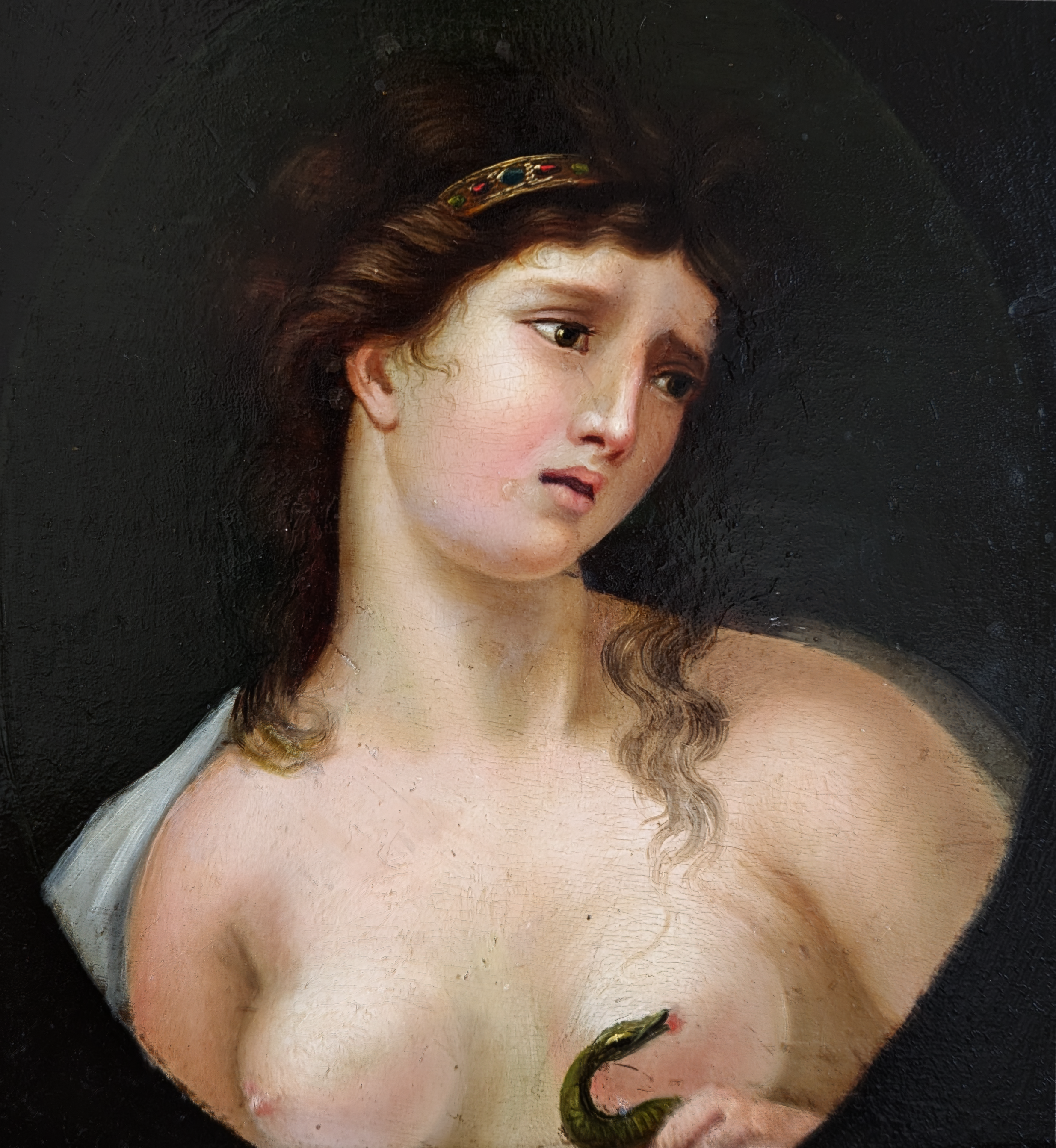
On 3 June 2026, I will be presenting an experimental revival of Franz Danzi’s melodrama Cleopatra in Leiden together with colleagues from the Dutch Historical Acting Collective. This project is very close to my heart and forms part of a larger research and performance trajectory around eighteenth-century melodrama, historical acting, and the musical-theatrical culture of Mannheim.
Cleopatra
Melodrama for spoken actors and music (1780)
Music by Franz Danzi
Text by Johann Leopold Neumann
Date: 3 June 2026, 20:00
Admission: Free
Location: Waalse Kerk, Breestraat 62–64, Leiden, Netherlands
Spoken actors: Laila Cathleen Neuman, João Luís Paixão, Jed Wentz, Annelies Andries
Fortepiano: Anders Muskens
Moderator: Jed Wentz
The performance is presented as part of the academic conference “Staging the Heroine” at Leiden University.
Marking the bicentenary of Franz Danzi’s death (1826–2026), this event presents a revival of his early melodrama Cleopatra, first performed in Mannheim in 1780. Danzi, a native of Schwetzingen and Mannheim, emerged from one of the most important musical-theatrical centres of late eighteenth-century Europe. He was shaped by the artistic world of the Mannheim court and studied with the influential Kapellmeister Georg Joseph Vogler. Over the past period, I have been working on the edition and interpretation of Cleopatra, as well as on questions surrounding its revival, dramaturgy, and performance practice. This includes not only the musical side of the work, but also the acting practices that would have shaped its original theatrical effect. The version presented in Leiden is a reduced performance with fortepiano, adapted from Danzi’s original orchestral score. My hope is to develop this research further into a larger staged production with orchestra.
Cleopatra belongs to the genre of melodrama, in which spoken declamation unfolds in close dialogue with instrumental music. The text was written by Johann Leopold Neumann (1745–1813), a Dresden writer, musician, translator, and dramatist. The drama depicts the final hours of Cleopatra’s life: Alexandria is under siege, Antony has been sent to confront the Roman army, and Cleopatra, in a pathos-filled Sturm-und-Drang monologue, faces the collapse of her reign and the threat of humiliation under the Roman conqueror Octavius. The work emerged during a wave of melodrama in Mannheim following performances of Georg Benda’s Ariadne auf Naxos and Medea in the late 1770s. Composers of the Mannheim circle, including Vogler, Cannabich, Winter, and Danzi, took up the genre with enthusiasm. In these works, music does not merely accompany the spoken word; it intensifies, interrupts, colours, and shapes the emotional trajectory of the drama.
The role of Cleopatra was originally premiered by Sophie Seyler (née Hensel), one of the leading actresses of the German stage and a central figure in the Seyler Theatre Company, whose touring activity helped professionalize German-language theatre. In Mannheim, this repertoire found a powerful institutional home at the newly founded Mannheimer Nationaltheater, a German-speaking stage supported by the reigning Prince-Elector Carl Theodor.
I warmly invite friends, colleagues, and anyone interested in historical theatre, eighteenth-century music, and performance research to join us.